What we do
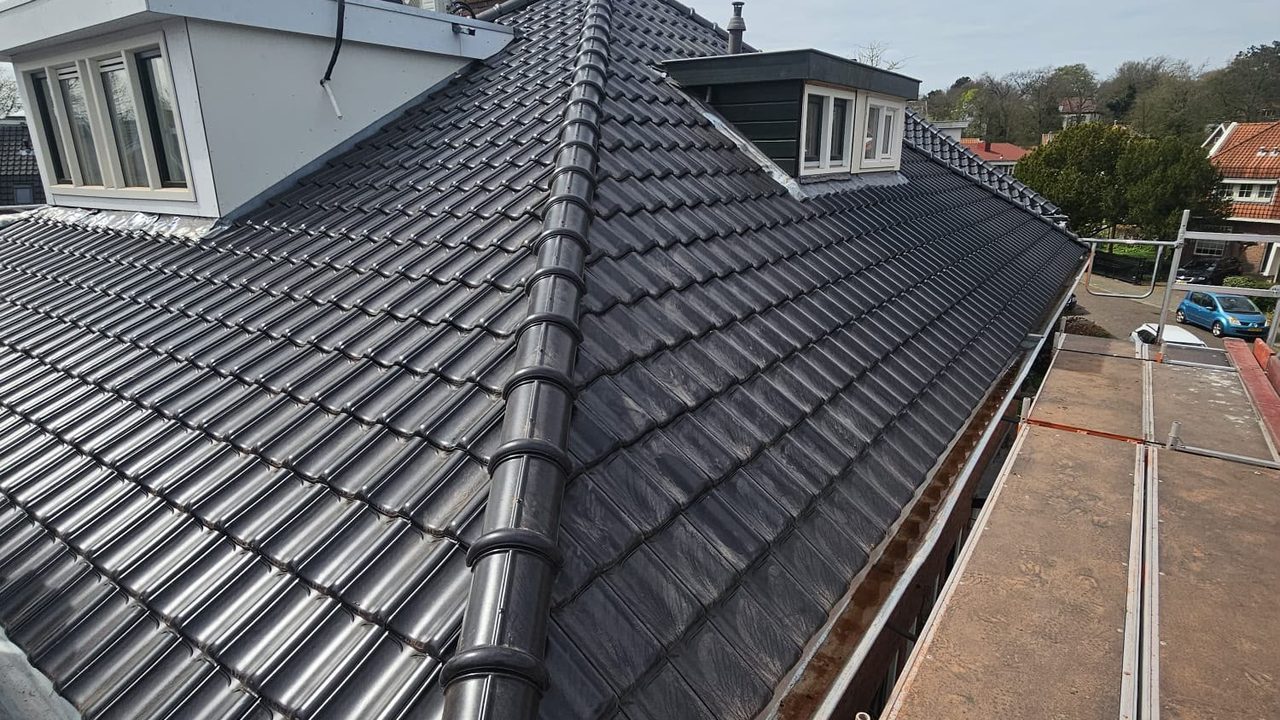
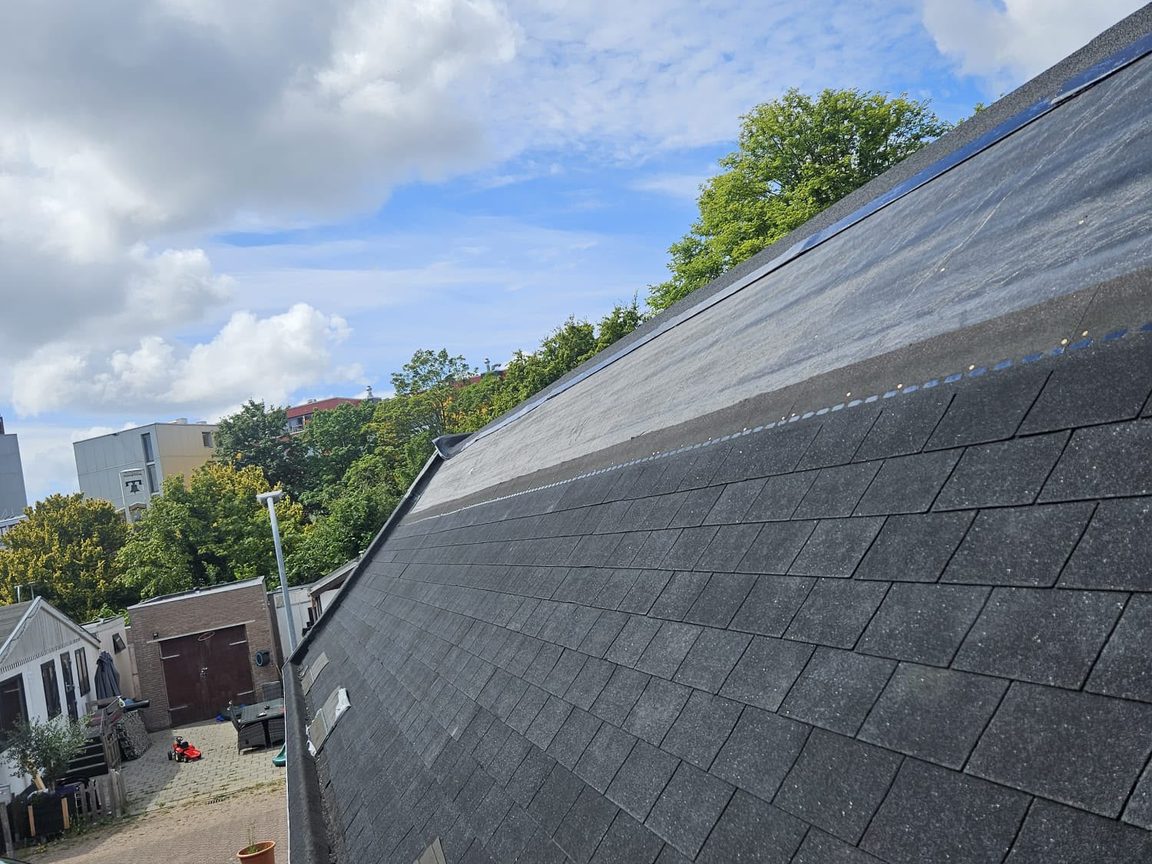
Tiled roof renewal
Tiles, battens and membrane off and back on, done once properly.
In short
What this is about
On a pitched roof the tile is rarely the problem. A clay pantile lasts fifty to seventy-five years; the battens it sits on and the membrane underneath do not get anywhere near that. Draughts, sand on the loft floor, a damp patch appearing in one corner during driving rain: all three point at the layer below, not at the surface you can see.
That is also why relaying the old tiles on their own is usually a missed opportunity. The roof is coming off regardless. Replacing the battens and the membrane costs a fraction of the scaffold that is already standing, and adding insulation after that costs little more than the material. Skip it, and in eight years you are paying for the same scaffold around the same house.
During the survey we record what is actually there: the profile and colour of the tile, whether it is still available, how many are cracked, and whether the roof structure can carry the new build-up. That last point matters if you are moving to slate or to a heavier tile, because the weight per square metre changes and somebody has to have looked at it.
Want to know what is actually on your roof?
The survey costs nothing, takes about an hour, and produces a report with a photo per roof plane, the condition of the deck and the insulation calculation. That report stays yours.
Where it goes wrong
The same tile or a different one
A 1930s Dutch pantile is often still made, and where it is not there is usually a profile close enough that the neighbours will not notice. That is not decoration: inside the protected townscape, colour and profile are exactly what the assessment is about.
Battens, counter battens and membrane
The counter batten (tengel) is the strip underneath the tiling batten that lets any water reaching the membrane run down to the gutter. Leave it out and water stands against the batten, which is the single most common fault on roofs relaid between 1970 and 1995.
Dormers, roof windows and chimneys
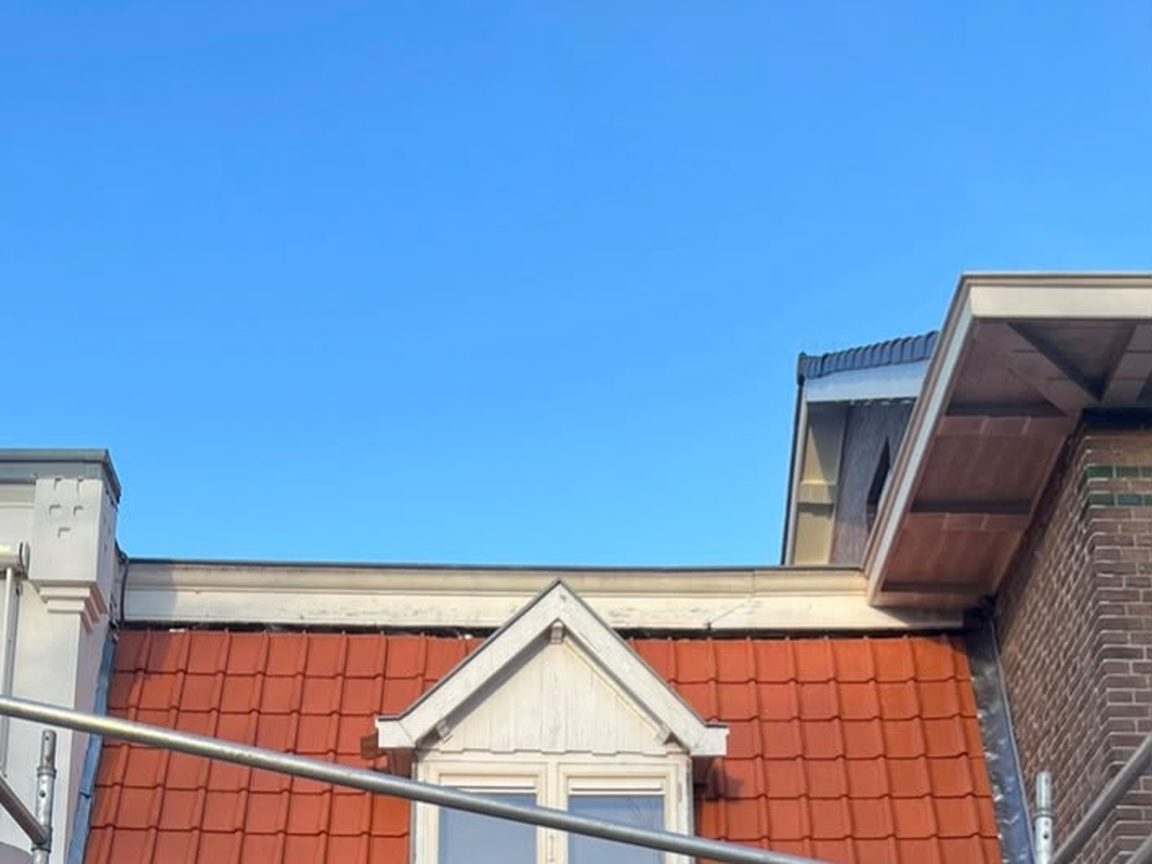
Each of the three sits in lead or zinc, and that metalwork is nearly always older than the tiles. A roof renewal that leaves those junctions alone is a roof that will leak in the same place again, with newer tiles above it.
Storm clips
In Zandvoort, Aerdenhout and on the western edge of Overveen the roof takes the sea wind head on. There the verge and ridge tiles are clipped rather than only hooked. That is a decision per address, not a standard line item.
Indicative price per roof type
What this costs, roughly
Amounts per square metre of roof surface. What explains the spread is in the third column, and what is not included follows underneath.
| Roof type | Per m2 |
|---|---|
| Flat roof, two layers of bitumen | € 65 to € 95 |
| Flat roof, EPDM | € 80 to € 120 |
| Flat roof as a warm roof, with 160 mm PIR | € 150 to € 200 |
| Tiled roof, clay, with new battens and membrane | € 95 to € 150 |
| Tiled roof with insulation between the rafters | € 170 to € 240 |
| Zinc roof plane or large valley gutter | € 160 to € 230 |
| Natural slate roof | € 180 to € 260 |
What is not included
Scaffolding, insulation, repair of a damaged deck, roof windows, and removing and refitting solar panels. All five appear as separate lines on the quote with a quantity and a unit rate, so that you can check them and strike them.
Why there is no fixed price here
Because we have not seen your roof. What makes a roof expensive is rarely the material and nearly always the access and the number of junctions. That is why the survey is free and the report is yours: then you can check what any quote is worth, including somebody else’s.
Background
The background to this work
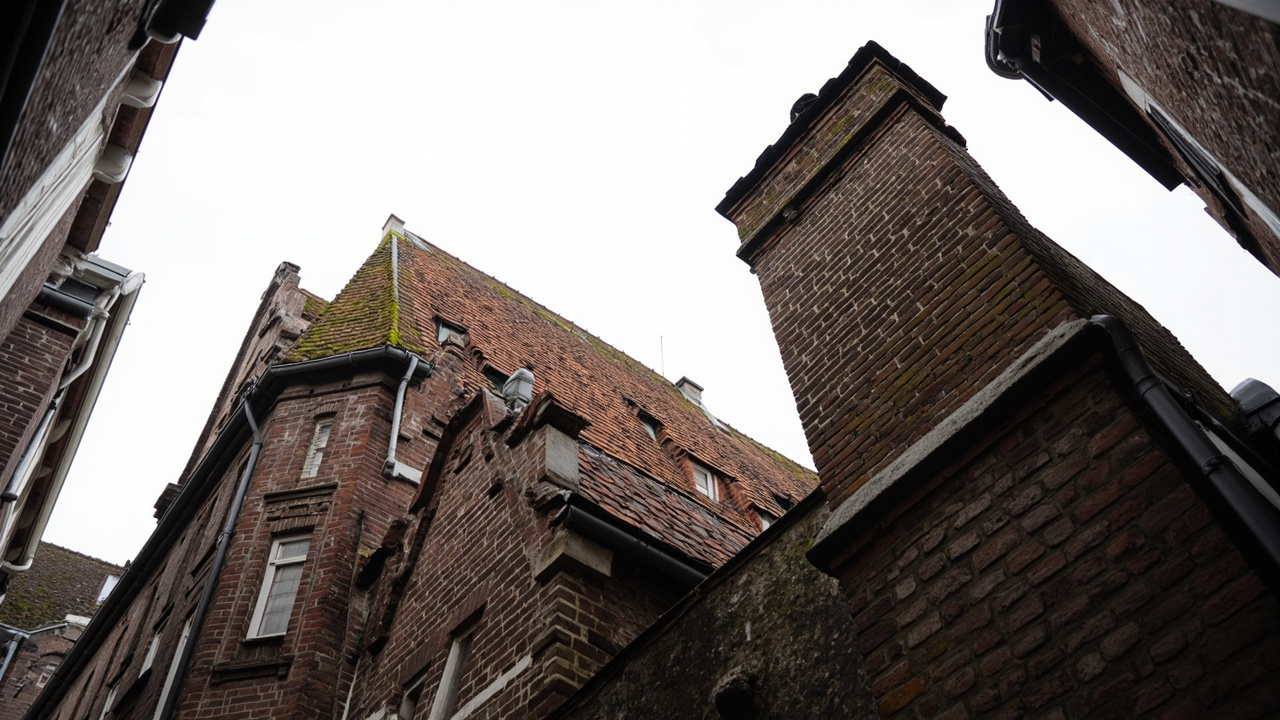
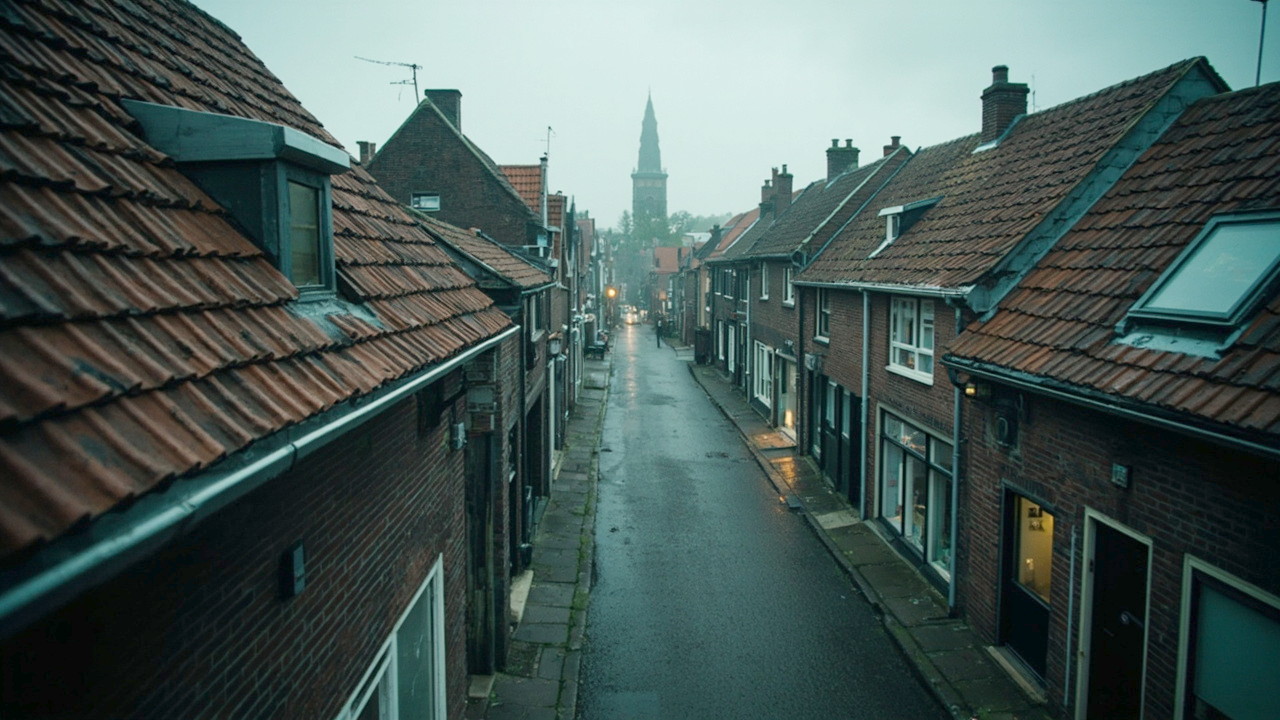
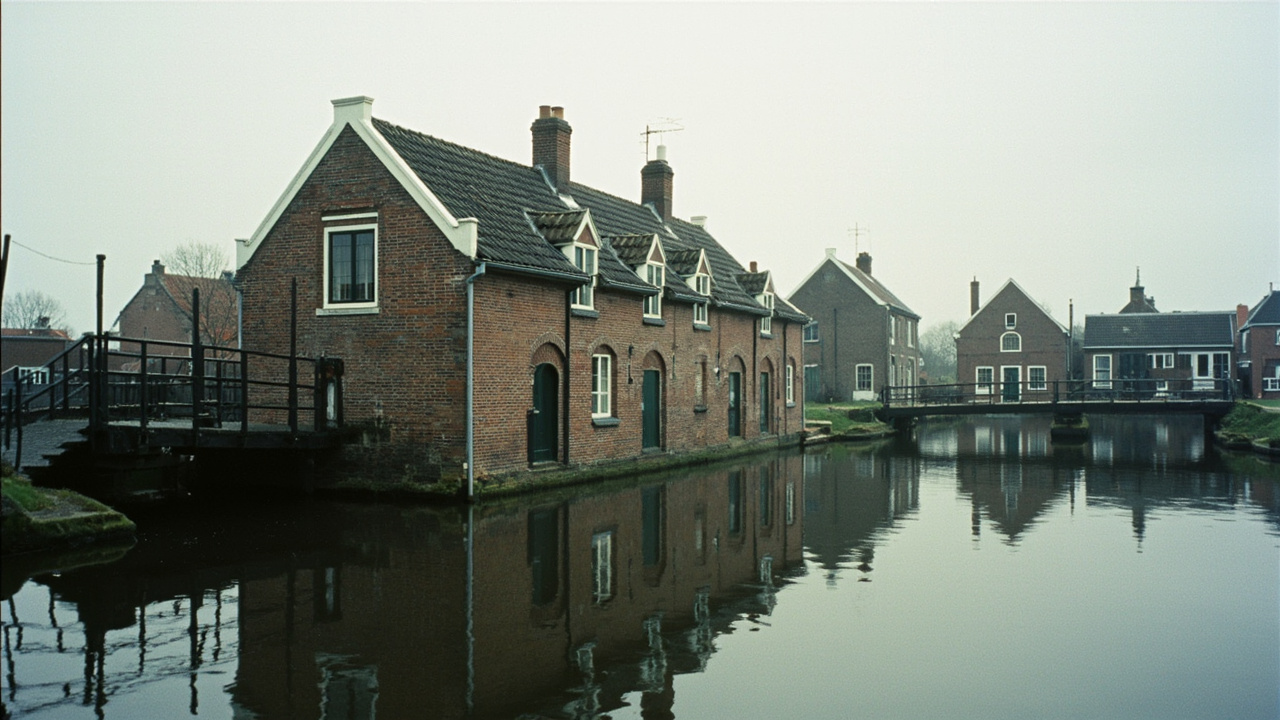
The pitched roofs here fall into three periods, and each has its own weak point. In the Haarlem old centre and in Spaarndam you find roof structures from the seventeenth to the nineteenth century: timber rafter roofs, often with no membrane at all, tiles resting straight on the battens and sometimes no roof boarding underneath. There, replacement is a restoration conversation and the conservation assessment is one of the first steps rather than the last.
Between roughly 1900 and 1940 the expansion districts went up: Kleverpark, Bosch en Vaart, the Ramplaankwartier, much of Heemstede and Overveen, and the villa parks of Bloemendaal and Aerdenhout. Those roofs are steep, carry wide dormers and zinc box gutters, and were commonly relaid once in the 1970s. Whatever was added then is usually exactly what has to come out now.
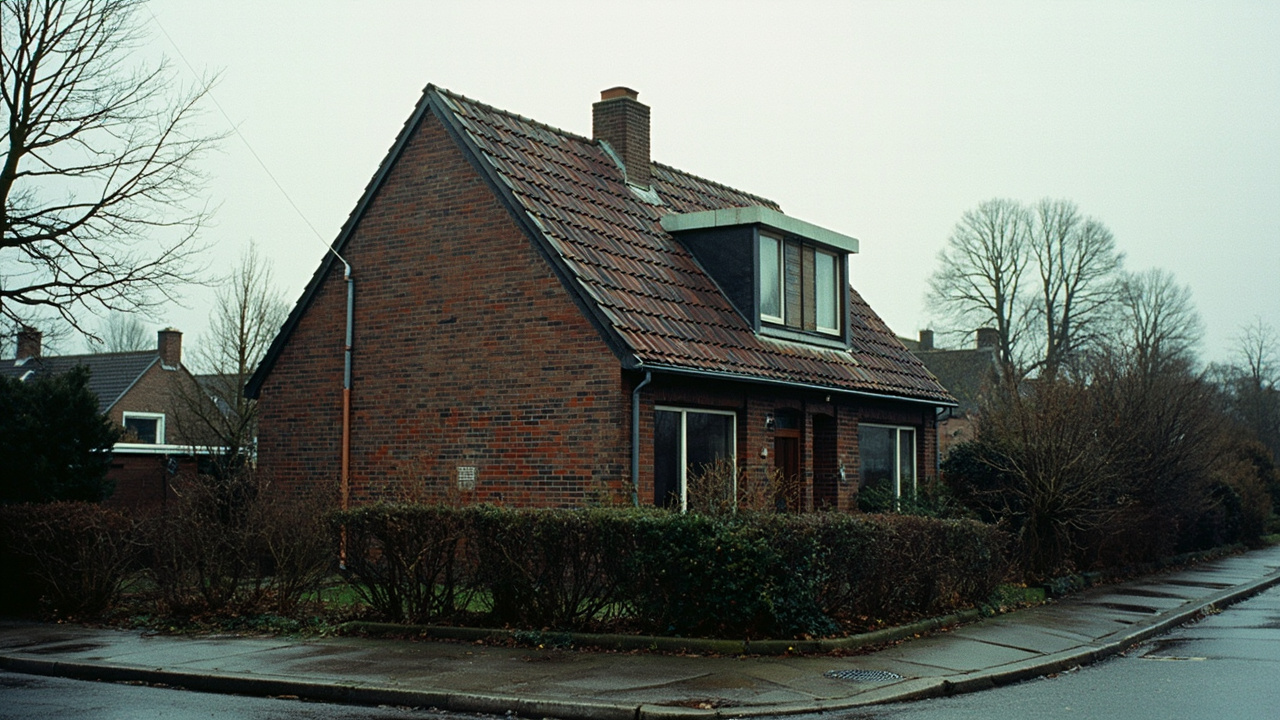
After the war building went lower and flatter, with concrete tiles that are heavier and shorter lived than clay. On those roofs, moving back to clay is often cheaper over the long run and sometimes even lighter, but it does require somebody to have checked the structure before the tiles go on the lorry. What is on your roof appears in the report after the survey, with photographs of the ridge, the gutter and the junctions.
Send it along and we will set it out beside ours
Send it along. We set out line by line what it does and does not cover, and that is often more useful than adding a third quote to the pile.
Questions
Questions about tiled roof renewal
Missing your question here? Pick up the phone. About your own roof something concrete can be said; about roofs in general the page above has it covered.
Can the old tiles go back on?
Often yes, and it helps both the price and the conservation assessment. Expect ten to twenty per cent breakage while taking them off and relaying them; those are made up in the same profile. If the tiles are porous or have been frost damaged, the report says so and a new profile goes on.
Does my loft need to be cleared?
For insulating from the inside, yes. For a replacement from the outside, no, but we do ask you to cover things up. Dust and old sand come down the moment the tiles lift, even when the boarding looks closed.
How long does a tiled roof take?
Three to eight working days for a terraced or semi-detached house, longer for a villa with valleys and several dormers. Add the scaffold to that: it normally goes up a day before and comes down a day after.
The other three kinds of work
Quote
Request the survey
You hear within one working day when we can come. The survey itself costs nothing and the report stays yours, including when you go on with somebody else.
Rather speak to somebody now
For a question about a quote you already have, or about what is allowed at your address, calling is faster than this form.
Start with a photo
A photo of the eaves, the gutter or the place where it leaks says more than half a form. Send it ahead and we know what we are looking at.