What we do
Flat roof replacement
EPDM or bitumen, with the insulation going on in the same operation.
In short
What this is about
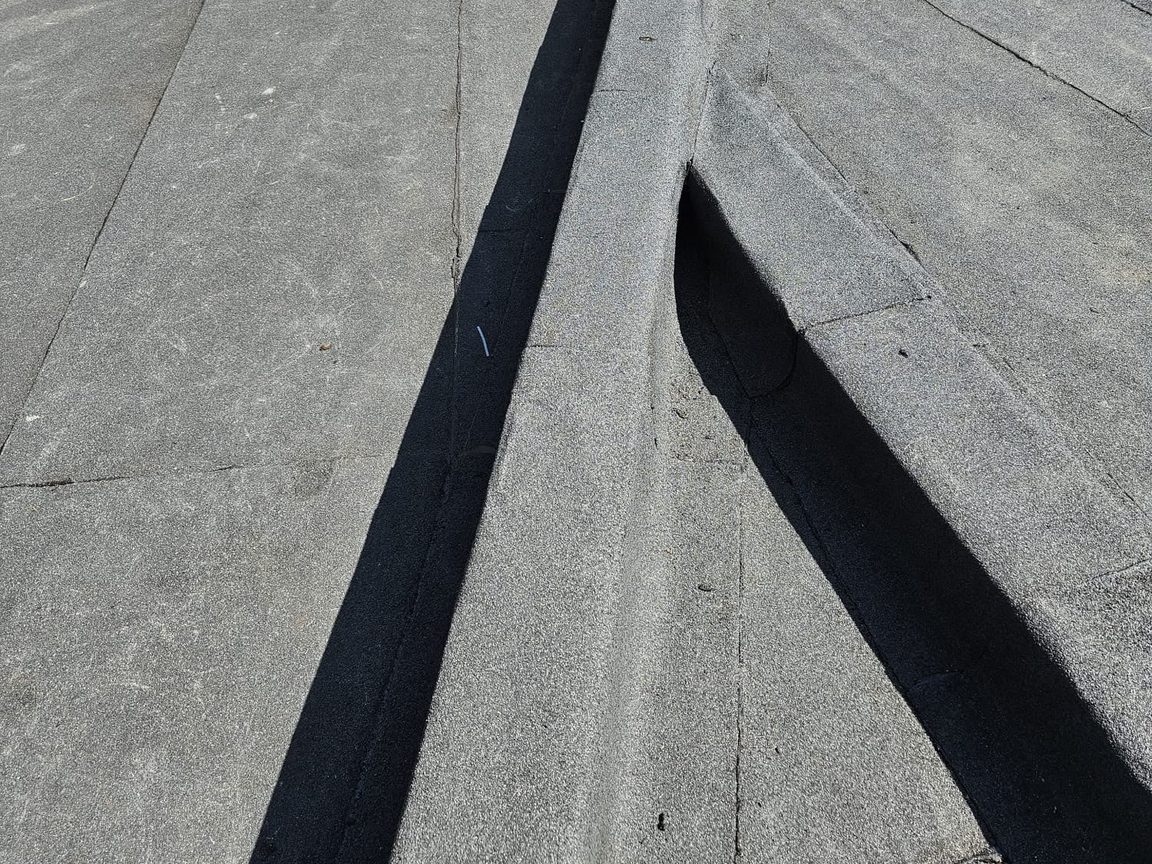
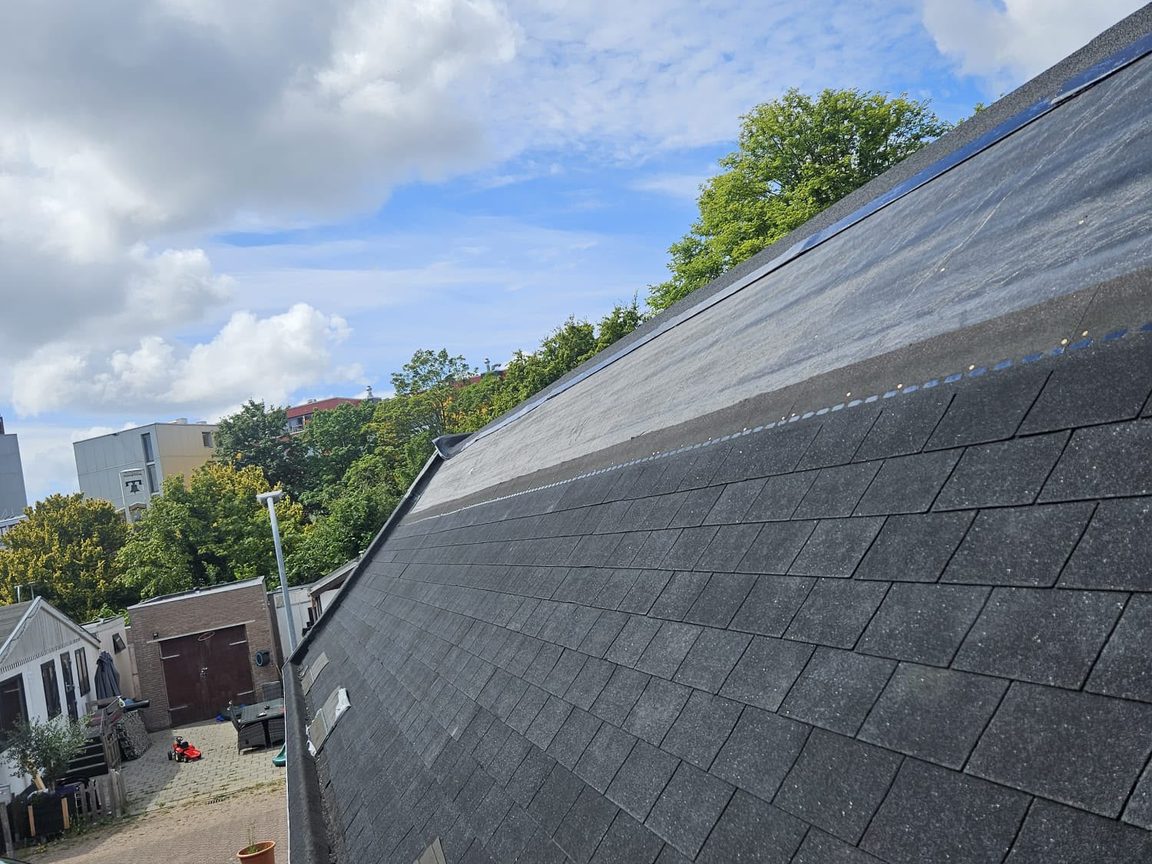
A flat roof being finished is not a feeling. It is a short list of things you can see: blisters under the top layer, hairline cracks where the covering turns up against a wall, mineral granules washing out of the downpipe, and puddles still standing two days after rain. One of those is maintenance. Three at once means that repairing costs more than replacing, and the only question left is what goes on top.
We strip the old layers back to the deck, check that deck for rot and sagging, and build it up again. That rebuild is the only moment when insulation can go on without paying twice for the same work, which is why the two sit in one quote here rather than two. Taking a covering off a second time costs almost what it cost the first time.
Which covering goes on is your call. EPDM and bitumen do the same job and differ on three points: price, how long they last, and how much handwork your particular roof demands. The table shows the difference. Which of the two wins on your roof depends on the number of corners and pipe penetrations, and we only see that once we are standing on it.
Want to know what is actually on your roof?
The survey costs nothing, takes about an hour, and produces a report with a photo per roof plane, the condition of the deck and the insulation calculation. That report stays yours.
Where it goes wrong
When repair still makes sense
One lifted seam or one blister is an hour of work and we do that too. The line is the third repair on the same roof within two years: by then you have paid three call-outs and a scaffold for a roof that has to come off anyway.
What is under the covering
Plywood, timber boarding or concrete. With timber the deck itself is the risk: where water has been sitting the board is soft, and that cannot be seen from above while the covering is still on. It goes into the survey report with the location marked.
Gravel, pavers and roof terraces
Gravel is there for UV protection and to stop wind lift. At the coast it blows away, and a ballast mat or mechanical fixing takes its place. A roof terrace needs a heavier top layer: it gets walked on, and footfall wears a covering faster than sunlight does.
Pipes, roof lights and solar panels
Every penetration is a junction and every junction is a possible leak. If panels are up there they come off first and go back afterwards; that appears as its own line in the quote rather than hidden inside the square metre rate.
Indicative price per roof type
What this costs, roughly
Amounts per square metre of roof surface. What explains the spread is in the third column, and what is not included follows underneath.
| Roof type | Per m2 |
|---|---|
| Flat roof, two layers of bitumen | € 65 to € 95 |
| Flat roof, EPDM | € 80 to € 120 |
| Flat roof as a warm roof, with 160 mm PIR | € 150 to € 200 |
| Tiled roof, clay, with new battens and membrane | € 95 to € 150 |
| Tiled roof with insulation between the rafters | € 170 to € 240 |
| Zinc roof plane or large valley gutter | € 160 to € 230 |
| Natural slate roof | € 180 to € 260 |
What is not included
Scaffolding, insulation, repair of a damaged deck, roof windows, and removing and refitting solar panels. All five appear as separate lines on the quote with a quantity and a unit rate, so that you can check them and strike them.
Why there is no fixed price here
Because we have not seen your roof. What makes a roof expensive is rarely the material and nearly always the access and the number of junctions. That is why the survey is free and the report is yours: then you can check what any quote is worth, including somebody else’s.
Background
The background to this work
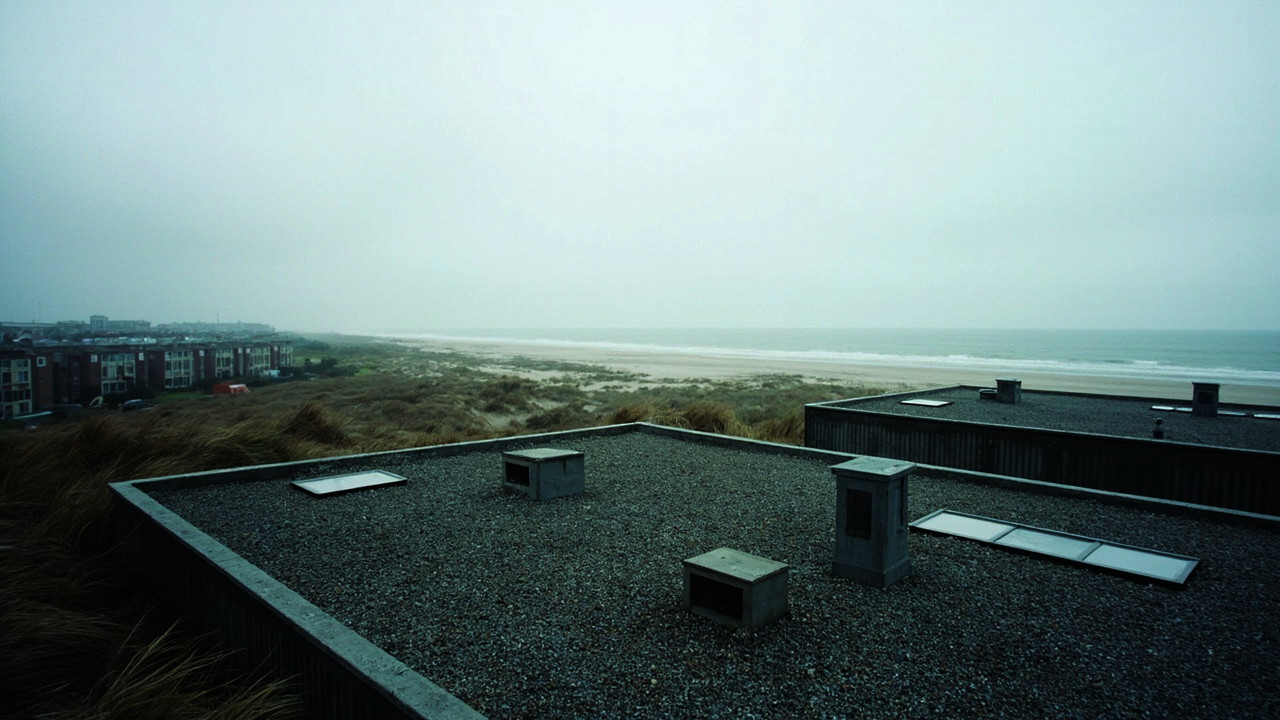
Most flat roofs in this area sit on post-war building stock: Schalkwijk, the flats along the Amerikaweg, the rear extensions behind the 1930s houses in Heemstede and Overveen, and the apartment blocks along the Zandvoort boulevard. They were laid between roughly 1960 and 1985, usually in two layers of bitumen on a timber or concrete deck, and almost never with insulation that would count by current standards.
That makes replacing a flat roof a different conversation from replacing a tiled one. On a pitched roof you are replacing the face of the house; on a flat roof you are replacing something nobody sees, so the question becomes what else you get for the money. The answer is insulation. Going from a bare deck to a warm roof with 160 mm of PIR is the largest single step still available on a house of that period, and it is only affordable while the roof is open.
If you own an apartment, the owners association (vereniging van eigenaren, usually shortened to VvE) is part of this. The roof is almost always communal property, even when you have the top flat and the stain is on your ceiling. The meeting decides, not you alone, and a quote that has to survive that meeting needs a different shape: split by item, with the condition of the deck recorded, so it can go into the long term maintenance plan. We deliver the survey in that form whether or not the work comes to us.
Send it along and we will set it out beside ours
Send it along. We set out line by line what it does and does not cover, and that is often more useful than adding a third quote to the pile.
Questions
Questions about flat roof replacement
Missing your question here? Pick up the phone. About your own roof something concrete can be said; about roofs in general the page above has it covered.
Can a new layer go over the old one?
Technically sometimes, sensibly rarely. A third layer seals in whatever moisture is already in the build-up, and that moisture never leaves. Only if the deck measures dry and there is no more than one existing layer is overlaying a real option, and then the measurement says so rather than the quote.
How long is my roof open?
An average flat roof of 40 to 60 square metres comes off and goes back on the same day. We never open more than can be closed again that day; in wet weather that means a smaller section per day, not a roof spending the night under a tarpaulin.
Do I need planning permission?
For replacing the covering on a flat roof that cannot be seen from a public road, usually not. For a listed building (rijksmonument), inside the protected townscape of Haarlem or Spaarndam, or where the roof is in view, it has to be checked. During the survey we look your address up in the municipal quality policy, and what it says goes into the report with the article number attached.
The other three kinds of work
Quote
Request the survey
You hear within one working day when we can come. The survey itself costs nothing and the report stays yours, including when you go on with somebody else.
Rather speak to somebody now
For a question about a quote you already have, or about what is allowed at your address, calling is faster than this form.
Start with a photo
A photo of the eaves, the gutter or the place where it leaks says more than half a form. Send it ahead and we know what we are looking at.