What we do
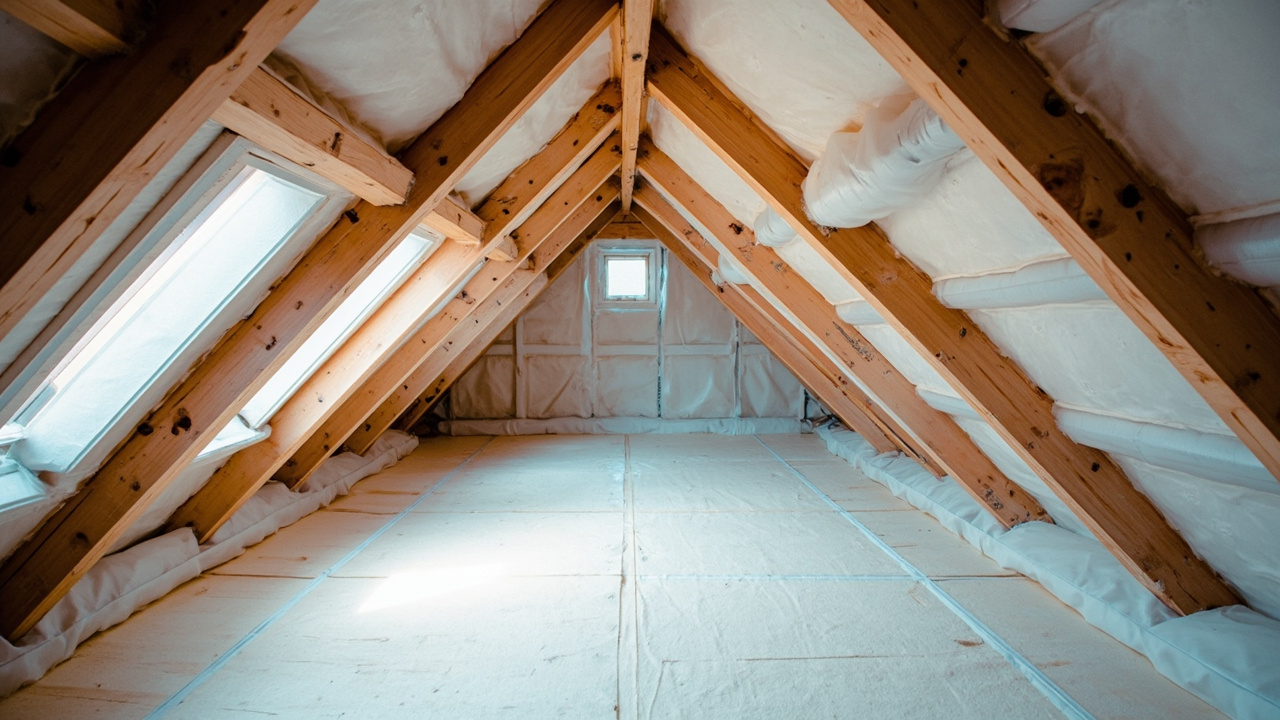
Roof insulation during renovation
From Rc 0.4 to 6.0, at the one moment the roof is open anyway.
In short
What this is about
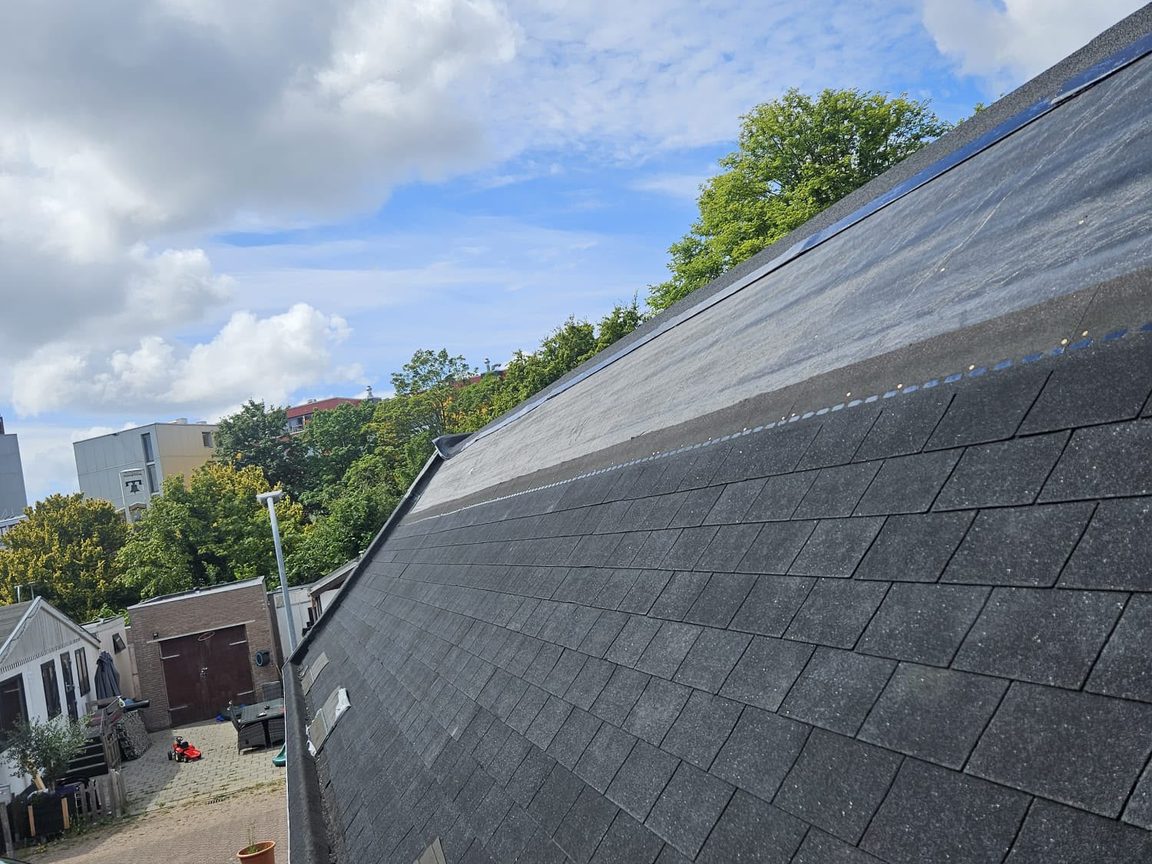
An uninsulated 1960s roof performs at around Rc 0.4 in practice. Rc is the Dutch measure of thermal resistance, in m2K/W, and higher is better. With 160 mm of PIR under a new covering that becomes Rc 6.0. It is the largest single improvement still available on a house of that period, and it is only cheap at this moment: the scaffold is standing, the roof is open, and the labour is already paid for.
Insulation can go on from inside or from outside. From inside is cheaper, costs head height in the loft, and depends entirely on an airtight layer that is genuinely airtight, because one untaped joint puts moisture into the structure. From outside costs no head height, deals with the cold bridges, and is only possible while the roof is off. Which suits you depends on what the loft is for and on whether the roof was due anyway.
What you get out of it appears in a calculation rather than in a sales line. During the survey we measure the roof area, work out the Rc value of both the existing and the proposed build-up, and put the grant threshold next to it. That calculation is yours, whether the work comes to us or not.
Want to know what is actually on your roof?
The survey costs nothing, takes about an hour, and produces a report with a photo per roof plane, the condition of the deck and the insulation calculation. That report stays yours.
Where it goes wrong
The threshold that matters
The Dutch ISDE grant sets a floor of Rc 3.5 m2K/W for roof insulation. A quote reaching Rc 3.0 is not wrong, but it falls outside the scheme, and that gap is larger than the price difference between the two. It is why we put the Rc value on the quote and not only the thickness in millimetres.
PIR, mineral wool or wood fibre
PIR insulates most per centimetre and is therefore the choice as soon as head height counts. Mineral wool is cheaper and needs more depth. Wood fibre keeps a loft cooler in summer and costs more. All three reach Rc 3.5; they differ in thickness, price and summer comfort, and you decide in that order.
The vapour control layer
On the warm side of the insulation there has to be a layer that stops moisture, and it is only worth anything if it is sealed at every joint, every rafter and every penetration. This is the item most often trimmed on a roof insulation job, and the item that the damage comes from.
Ventilation above the insulation
On a pitched roof, air has to be able to move between the insulation and the boarding, or the whole build-up has to be vapour open. An insulation board pressed tight against the boarding with neither of those is why a roof grows mould five years later.
Indicative price per roof type
What this costs, roughly
Amounts per square metre of roof surface. What explains the spread is in the third column, and what is not included follows underneath.
| Roof type | Per m2 |
|---|---|
| Flat roof, two layers of bitumen | € 65 to € 95 |
| Flat roof, EPDM | € 80 to € 120 |
| Flat roof as a warm roof, with 160 mm PIR | € 150 to € 200 |
| Tiled roof, clay, with new battens and membrane | € 95 to € 150 |
| Tiled roof with insulation between the rafters | € 170 to € 240 |
| Zinc roof plane or large valley gutter | € 160 to € 230 |
| Natural slate roof | € 180 to € 260 |
What is not included
Scaffolding, insulation, repair of a damaged deck, roof windows, and removing and refitting solar panels. All five appear as separate lines on the quote with a quantity and a unit rate, so that you can check them and strike them.
Why there is no fixed price here
Because we have not seen your roof. What makes a roof expensive is rarely the material and nearly always the access and the number of junctions. That is why the survey is free and the report is yours: then you can check what any quote is worth, including somebody else’s.
Background
The background to this work
A large share of the housing stock in Haarlem and the surrounding villages predates 1975, which is when insulation began to count in Dutch building regulations. Before that, roofs were barely insulated, and where they were it happened in the 1980s with five centimetres and no vapour control layer. That is often the worst of the three possible starting points: a layer too thin to do anything and thick enough to hold moisture.
What insulation saves depends on the roof area and on how you heat, and we do not know either in advance. What we can do is put the two build-ups next to each other with their Rc values, so that you see the difference in the one number the options can actually be compared on. We do not attach a payback period to that: it rests on an energy price nobody knows ten years out, and a number built on that assumption does not belong on a quote.
For an apartment with an owners association the picture is different. The roof is communal, so the insulation is too, and the decision is taken at the meeting. What helps there is a survey split by item that records the state of the deck, because that is what a long term maintenance plan needs. We supply it in that form regardless of where the work goes.
Send it along and we will set it out beside ours
Send it along. We set out line by line what it does and does not cover, and that is often more useful than adding a third quote to the pile.
Questions
Questions about roof insulation during renovation
Missing your question here? Pick up the phone. About your own roof something concrete can be said; about roofs in general the page above has it covered.
Can I insulate without taking the roof off?
On a pitched roof, yes, from inside. You give up head height in the loft and the quality rests entirely on the airtight layer. On a flat roof it is also possible from inside, but it moves the condensation point into the deck, which is a poor idea with a timber deck. What works in your case is on paper after the survey.
How much depth does it cost in the loft?
With PIR roughly 12 to 16 centimetres including the finish, with mineral wool 18 to 24. That is why a loft somebody sleeps in nearly always gets PIR, and a loft that stays storage nearly always gets mineral wool: up there the depth is free.
Will I get a grant?
That depends on the scheme conditions at the time of the work and on how many measures you take at once. What we do is make sure the work meets the Rc 3.5 floor and that the invoice carries the details an application asks for. You submit the application yourself, because it stands in your name.
The other three kinds of work
Quote
Request the survey
You hear within one working day when we can come. The survey itself costs nothing and the report stays yours, including when you go on with somebody else.
Rather speak to somebody now
For a question about a quote you already have, or about what is allowed at your address, calling is faster than this form.
Start with a photo
A photo of the eaves, the gutter or the place where it leaks says more than half a form. Send it ahead and we know what we are looking at.